

The real reason Stranger Things is so popular

While many shows barely make it past a single season, Stranger Things has defied the odds with an almost decade-long, globally successful run. Since its debut in 2016, the series has kept audiences engaged by blending supernatural thrills with the realities of growing up. Now, as we settle in for the final season, we’re not just saying goodbye to a show, but to characters many viewers have grown up with.
Dr Matthew Cipa from the School of Communication and Arts sat down with Contact to explore why that shared journey matters – and why coming-of-age stories leave such a lasting impression.


Dr Matthew Cipa, Teaching Associate in Film and Television
Dr Matthew Cipa, Teaching Associate in Film and Television
As we approach the beginning of the end of Stranger Things, it is worth going back to consider how things started. We were dropped into a specified time and place – 1983 in the fictional small town of Hawkins in Indiana.
Flickering lights, emergency sirens and a panicked scientist keyed us into an unfolding disaster in the Hawkins National Laboratory for the U.S. Department of Energy. The scientist, in an elevator and seemingly moments away from escape (escape from what?), looked up towards an ominous, menacing noise before being ripped out of frame. Then, a sharp cut to a lawn sprinkler before we were shown a quintessentially American suburban family home. Another cut then placed us inside the home’s basement as a group of young boys participated – fearfully, excitedly – in the imaginative play of Dungeons and Dragons (DnD).
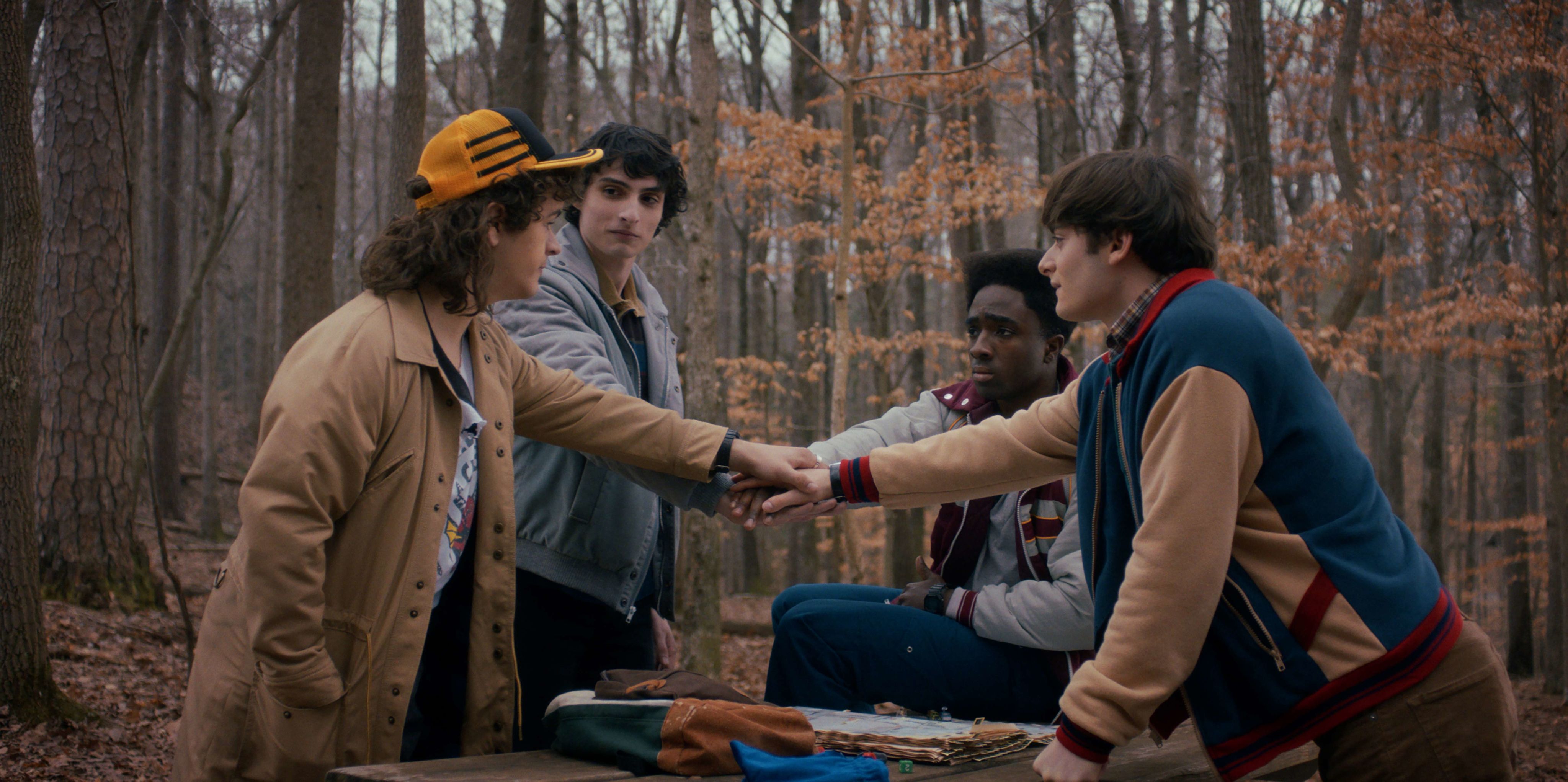
Across the 5 seasons of Stranger Things, we have become deeply familiar with these characters: Mike Wheeler (Finn Wolfhard), Dustin Henderson (Gaten Materazzo), Lucas Sinclair (Caleb McLaughlin) and Will Byers (Noah Schnapp).
We have watched them grow up in profound and unexpected ways. Over the show’s 10 years in production, television’s narrative expanse has allowed these stories – and those of many other young characters – to develop richly and subtly. This is television’s unique power for telling coming-of-age stories. To pull it off – as Stranger Things has done – is to create a particular type of experience for spectators: one that elicits our compassion and calls upon our own memories of parallel experiences.
Coming-of-age films, often afforded only 90–120 minutes to capture something of the experience of growing up, must take a different approach. Films will generally offer a condensed and concentrated story to examine the effects of particular, significant youthful experiences that accelerates characters’ coming-of-age journey. Take the characters’ journey to find the body of a missing boy in Stand By Me (1986) or the teen pregnancy in Juno (2007) as examples. As historically and geographically removed as viewers may be from such experiences, these films activate our own childhood and coming-of-age memories. We can recall something of the state of mind that made sense of the turning points experienced by our own younger selves and friends.
Coming-of-age stories in television are also littered with such moments of heightened significance: the disappearance of Will Byers that gives Stranger Things its narrative momentum, for example. But because of the expanded storytelling time of television shows, we are able to live with them and their characters, to imaginatively and playfully inhabit the show’s world – fearfully, excitedly – as the central 4 boys do their game of DnD.




It’s no surprise, then, that the impending conclusion of Stranger Things has taken on such significance – much of the show’s core audience (including many of my students) was growing up alongside its central characters. For those of us who are older, it motivated a reflection on the extended reality of coming-of-age – the graduality of it, the attrition of it and the exhaustion of it, but also the excitement, fear, joy and companionship that was interwoven in it as well.
For this reason, our long relationship with Stranger Things differs from that we might have had with other shows. While many of us are familiar with television goodbyes, there is a unique register to those goodbyes we make to characters who were children when we first met. Many spectators can recall saying farewell to Tony Soprano after 6 seasons and 8 and a half years of The Sopranos, or Don Draper after 7 seasons and 8 years of Mad Men.
Those shows, though, were explicitly concerned with the moral complexities of adults enacting their will and agency in the world. With the conclusion of Stranger Things, many of us are saying farewell to beloved characters, but so much of the show’s audience is saying farewell with the characters as well – saying goodbye to childhoods and adolescence, and confronting something perhaps even more fearful than the show’s terrifying Demogorgon: adulthood.

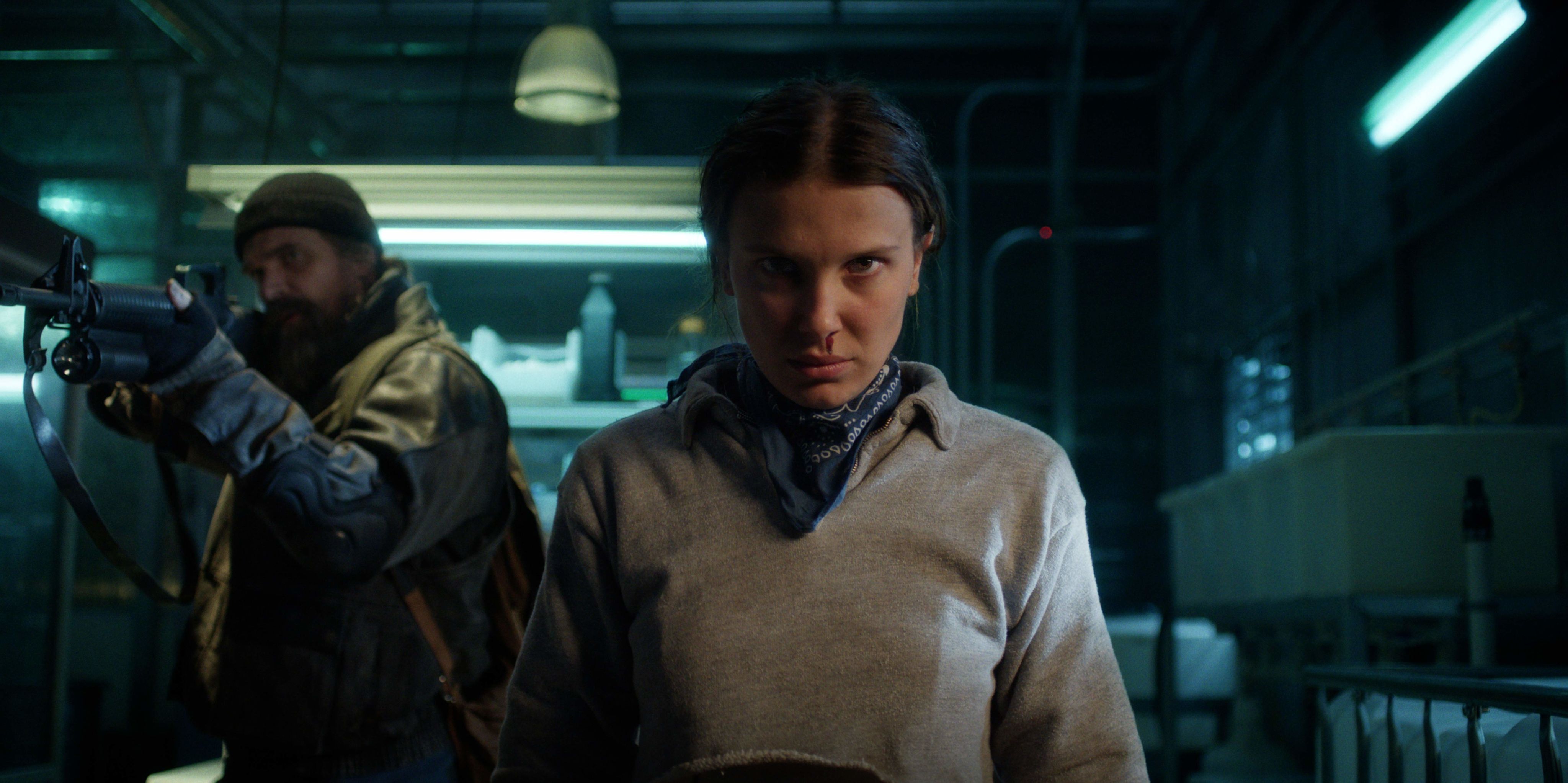
Image: courtesy of Netflix © 2025
Image: courtesy of Netflix © 2025

 Built with Shorthand