

Carving history: final grotesque in Great Court unveiled


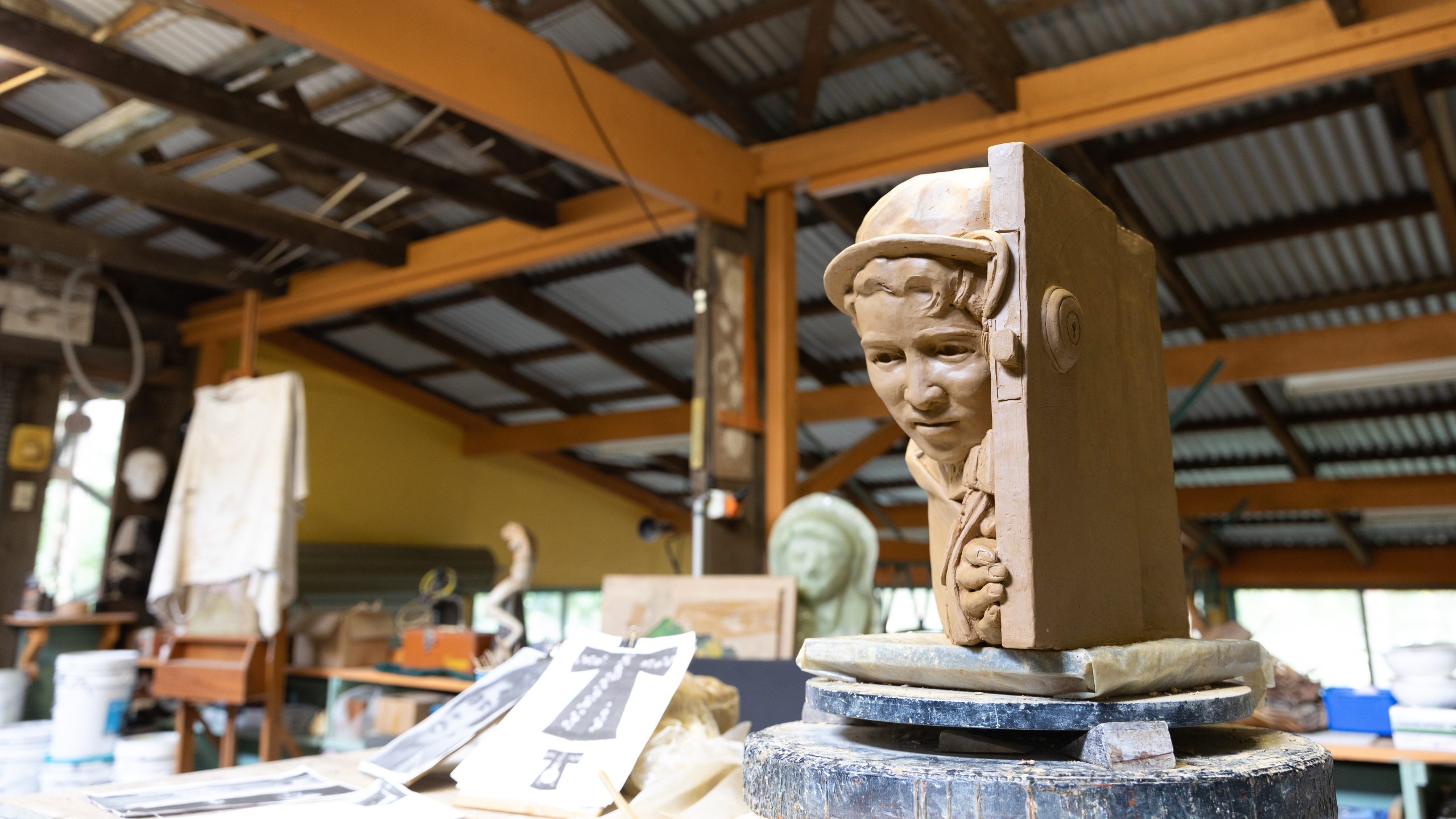
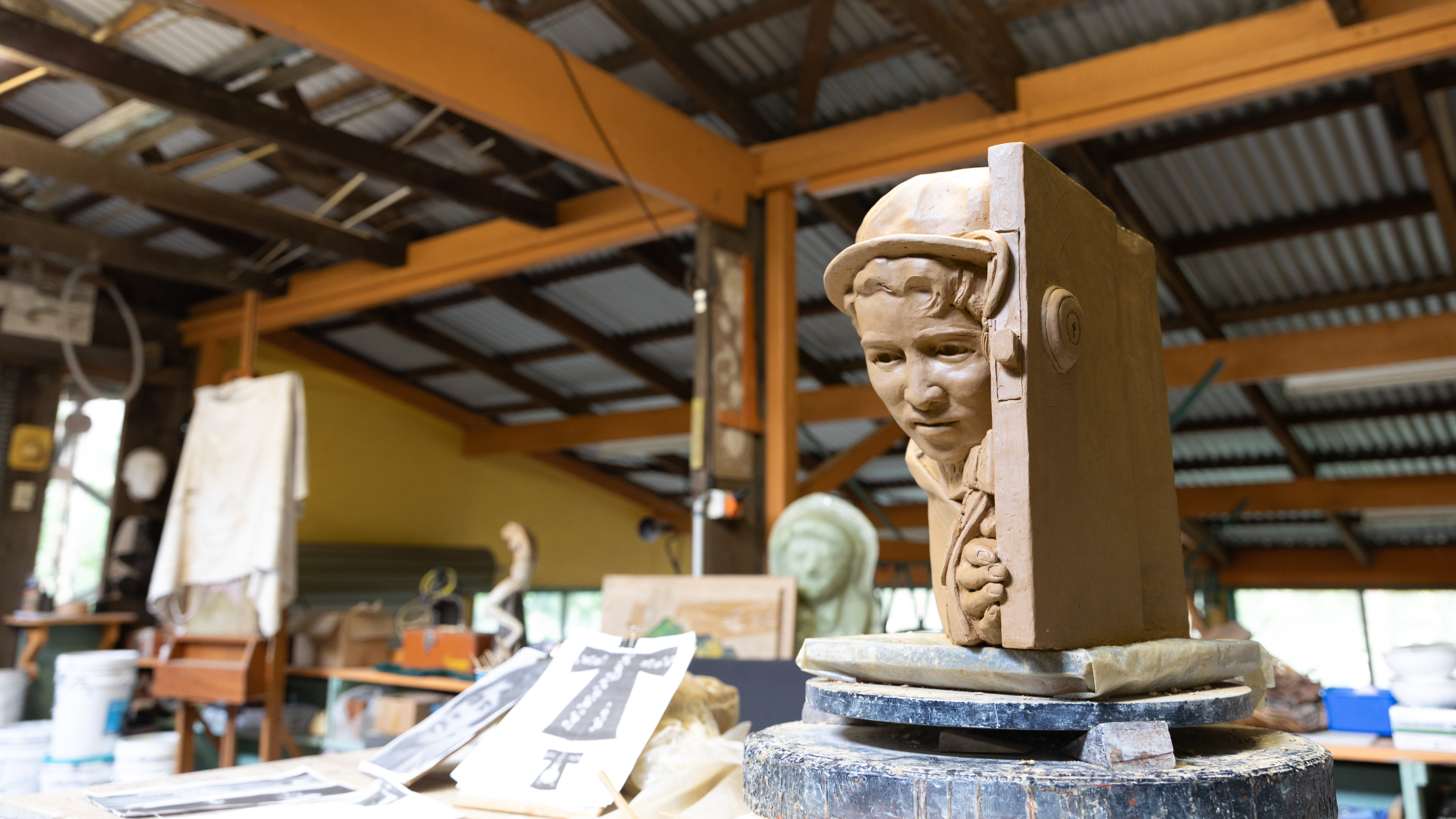
Header image: Rhyl Hinwood AM CF in her home studio with a clay maquette of UQ's final grotesque, depicting Margaret Valadian AO MBE, which is usually covered for protection during production.
Aboriginal and Torres Strait Islander readers are advised that this article contains the name and image of a deceased person.
Rhyl Hinwood AM CF has served as The University of Queensland’s (UQ) official University Sculptor since winning an open competition in 1976.
Her carving of the first Australian Indigenous woman to complete a university degree, Margaret Valadian AO MBE, has just become the final piece in the long history of ‘grotesque’ sculptures carved into the iconic Helidon freestone of UQ St Lucia’s Great Court.
It’s also Hinwood’s UQ swan song – the final piece in a remarkable series of sculptural works that have embellished our campuses and colleges.
Learn more about Hinwood's other UQ carvings and the history of our University Sculptors in our 2021 retrospective:
A ‘grotesque’ sculpture is a traditional decorative architectural carving of a human or animal figure, often with exaggerated or fantastical features.
Since 1993, 49 of these sculpted portraits have looked upon those passing beneath the Great Court’s cloisters – leaving one blank space unadorned.
Now, it has finally been filled.
Since being appointed UQ’s second-ever official University Sculptor, Rhyl Hinwood AM CF has dreamt of completing the 50th and final grotesque.
“I never thought the last grotesque would ever be completed in my lifetime,” Hinwood said.
“And I think the choice of subject is admirable.”
The carving of Margaret Valadian AO MBE (1936–2023), who in 2023 was posthumously awarded a UQ Honorary Doctorate, was a meaningful tribute to close this chapter in UQ’s history.
Learn more about Valadian's life and legacy.
A video showcasing Hinwood's journey as UQ's University Sculptor and creating the final grotesque.
Innovating the creative process
“When I first won the commission [to carve the grotesques] at UQ, I was carving with hand tools – I had 3 chisels and one mallet from the hardware shop,” Hinwood said.
In a departure from her earlier practice of the 1970s, this time around Hinwood created a ‘maquette’, or preparatory model (she’d never made sketches or models previously).
Neither did she carve this grotesque completely by mallet and chisel, nor with pneumatic tools, which she had used for decades.
“Too dangerous for my health!” she said.
“Even when I used basic masks with Vick’s Vaporub in my nostrils, as my mother had suggested, or later used sophisticated air-filtered masks, I always ended up covered in dust.
“This time, I made a 75% clay maquette, which a UQ technician 3D-scanned at my home studio. This scan was then sent to stonemasons in Sydney, where the scan was processed by a stone milling machine to reveal the required shape of the full-size grotesque.
“This technology saved me weeks and weeks of slow, hard and probably hot work.
“I just had to make sure that the final details were as I envisaged them.”
To create the maquette in correct proportion, Hinwood worked the clay as if it were stone.
“Working in clay is a building-up process, whereas carving in stone entails cutting back,” she said.
“On this occasion, I had to be sure that this last grotesque was the same size as all of the others, so I started with a roughly shaped block of clay about three-quarters the size and shape of the Helidon freestone block previously supplied for a grotesque. I then partly carved and modelled the clay with wooden hand tools.”
This maquette or scale model was then wrapped and stored in preparation for 3D-scanning. Once the scan was made and the milling machine had carved the high-quality freestone, the piece returned to Hinwood’s sculpture court, where she refined the final details – completing not just the grotesque, but her final contribution as UQ’s last grotesque sculptor.
“It came back onto the banker here in my own workplace, and in quite no time it was sent back to the University to be installed. Just like any other grotesque leaving here, that was quite a historic moment.”

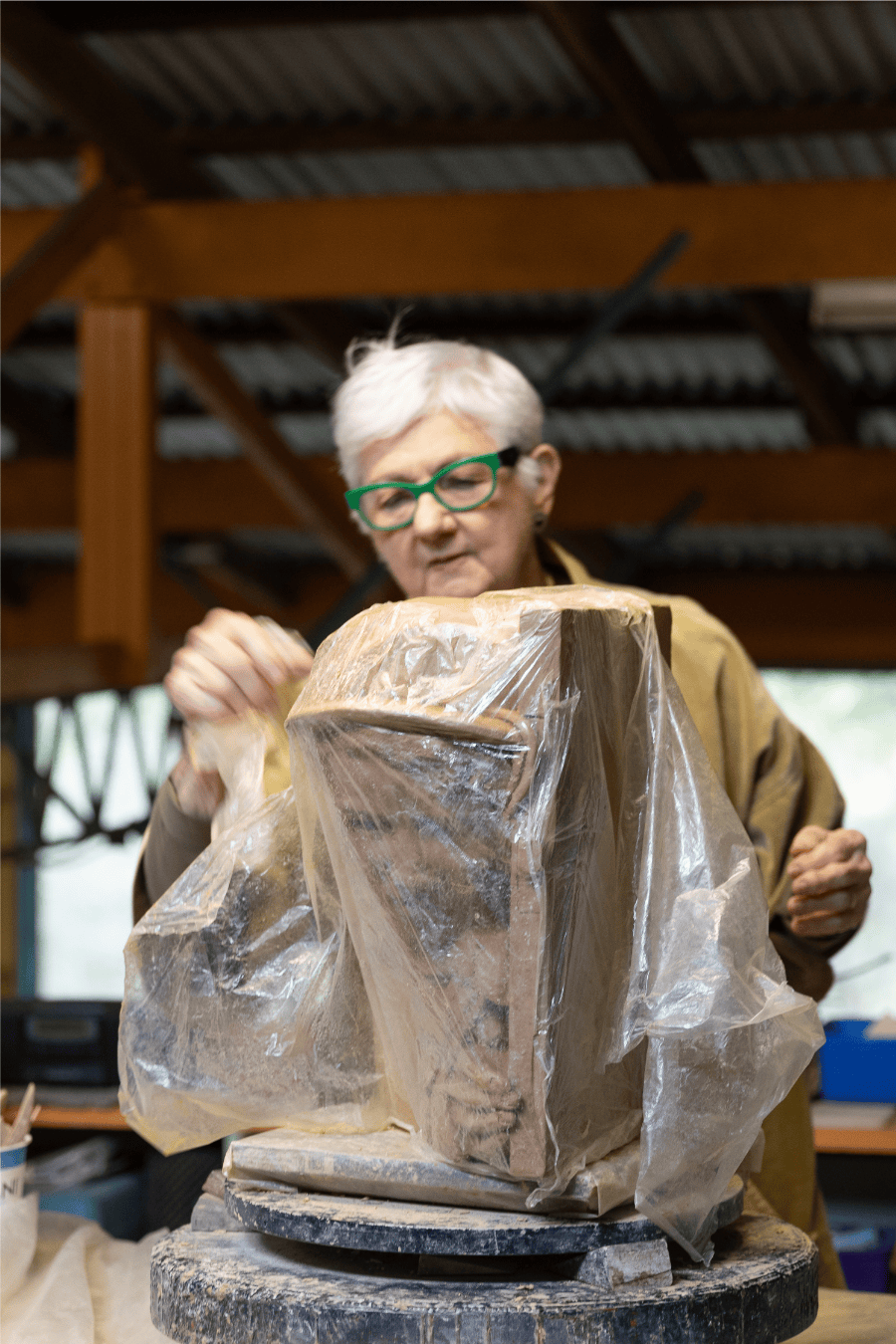
In her home studio, Hinwood unwraps the clay model of Valadian, which is usually covered in a plastic sheet for storage.
In her home studio, Hinwood unwraps the clay model of Valadian, which is usually covered in a plastic sheet for storage.
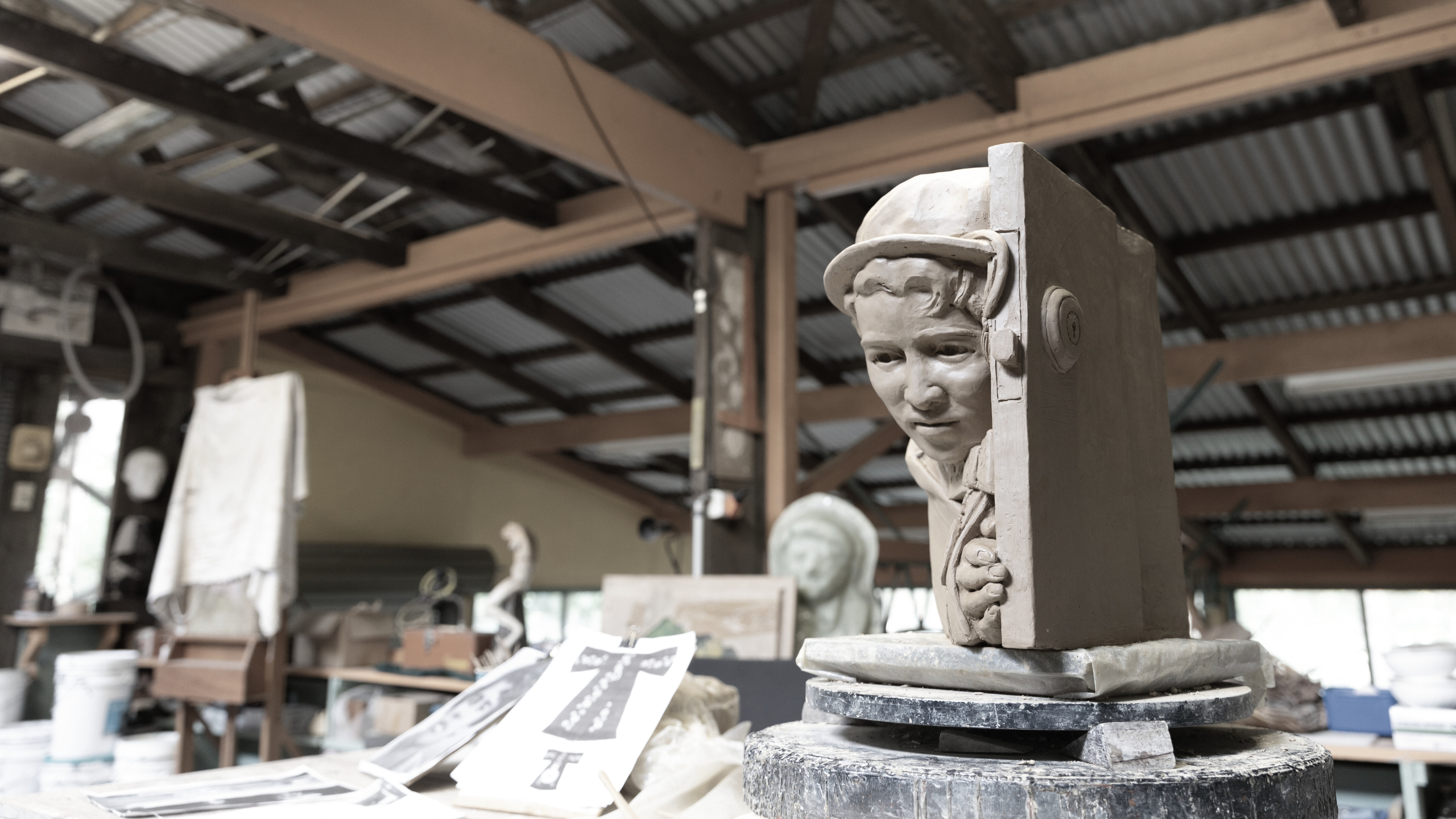
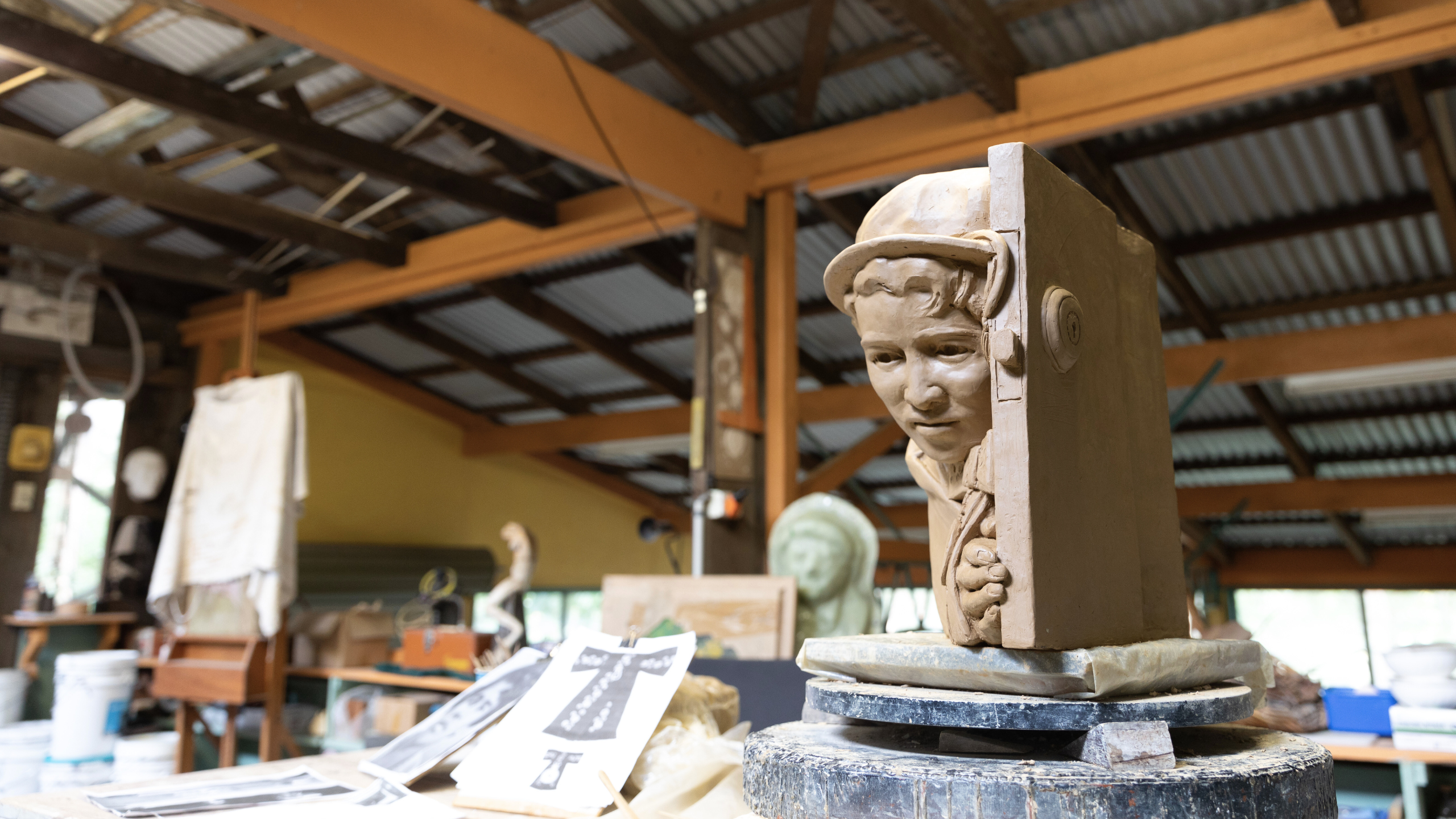
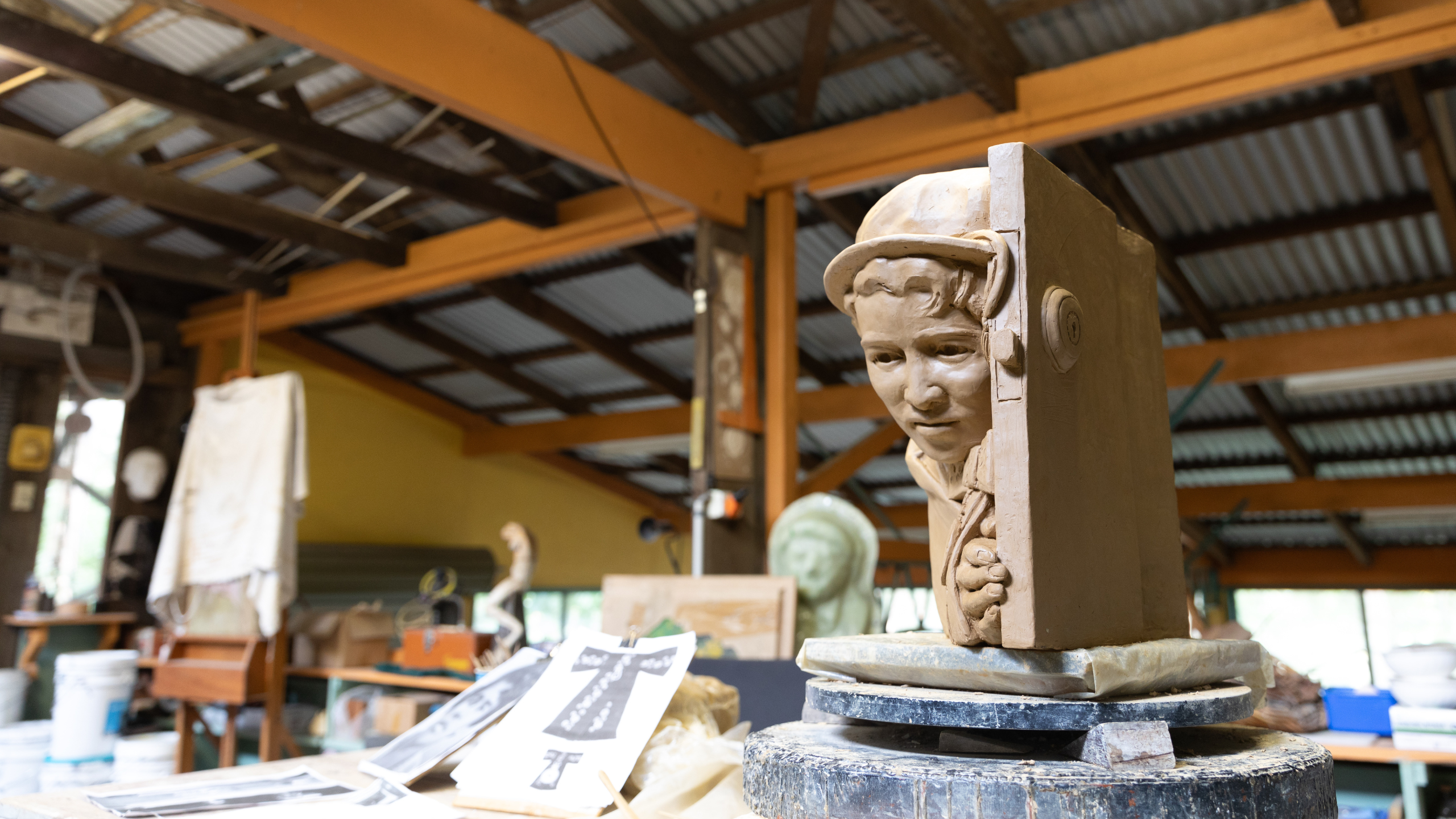
Background image: The clay maquette of UQ's last grotesque features Valadian, in her academic gown and bonnet, wearing her Officer of the Order of Australia insignia, pushing open a door.

Etching two legacies in stone
Hinwood spent considerable time researching and reflecting on how to best acknowledge and honour Valadian’s life, and how to represent her leadership symbolically.
"As I am not a person of Aboriginal descent myself, I was mindful of the care and respect I must have in dealing with such a significant subject,” Hinwood said.
“It was important to listen to the voices of the Elders with whom I was conferring, and so I began to make enquiries.
“I read about Margaret and her life of exceptional achievement in the fields of education and the social sciences.
“I contacted Jasmine, her niece who lives interstate. She spoke with pride about Margaret’s purposeful single-mindedness, her concept of ‘each one, teach one’, and suggested that when I began the portrait, I should refer to images of her as a charming and articulate young woman being interviewed by a well-known ABC journalist who pulled no punches.
“I spoke and wrote to many people in person, borrowed many books, read her speeches, and visited the UQ Anthropology Museum, where I was welcomed by the Director, Michael Aird, and proudly shown the Voices of our Elders: Aboriginal story tellers exhibition, which included some artworks by Gaiarbau whose grotesque portrait I had carved – along with Mother Earth – in 1978.”
However, it was Hinwood’s conversation with Deputy-Vice-Chancellor (Indigenous Engagement) Professor Bronwyn Fredericks, herself a passionate advocate for the power of education, that was the catalyst for grasping a meaningful concept.
“Professor Fredericks said that Margaret’s leadership role in society was what set her apart,” Hinwood said.
“She opened the door to new opportunities for her people and led them down new paths for success, consequently strengthening their culture. By becoming a role model, Margaret inspired and empowered her people to be the best they could be.”
This can be heard in Valadian’s 1991 Frank Archibald Memorial Lecture:
We have turned our backs on our most precious asset – the future generation…Perhaps the greatest challenge of all for the ’90s is to take time out and reassess who we are, what we are and where we are going. It is time to rediscover ‘the essence’ of our cultural heritage and begin again. We could start by regenerating in our children a love of learning and a love of ‘reading’ that was the foundation of child development in the traditional past. Teach a child to read and you give that child the freedom to determine his/her own options in life. Teach an adult to read and you give that adult the power to access the world, improve his/her life chances and make this a better world in which to raise the children. Despite all the technology, our community is less educated today than our ancestors of 40,000 years ago. The challenge of the ’90s is to make us not the least educated, but the best educated.
Ultimately, Hinwood chose to depict a symbolic door being opened by the academic-gowned – and bonneted – pioneer, wearing her Officer of the Order of Australia insignia.


Hinwood referred to images of Valadian and her achievements, including the Officer of the Order of Australia insignia, while carving the grotesque.
Hinwood referred to images of Valadian and her achievements, including the Officer of the Order of Australia insignia, while carving the grotesque.
Leaving a mark on history – and UQ
“I’m delighted that I was commissioned to complete this special grotesque, the last in a series of 50 in the Great Court and the sixth female subject I have created,” Hinwood said.
“I believe Margaret’s passion, determination and leadership made her a true pioneer and role model for her people, opening the doors of opportunity in life.”
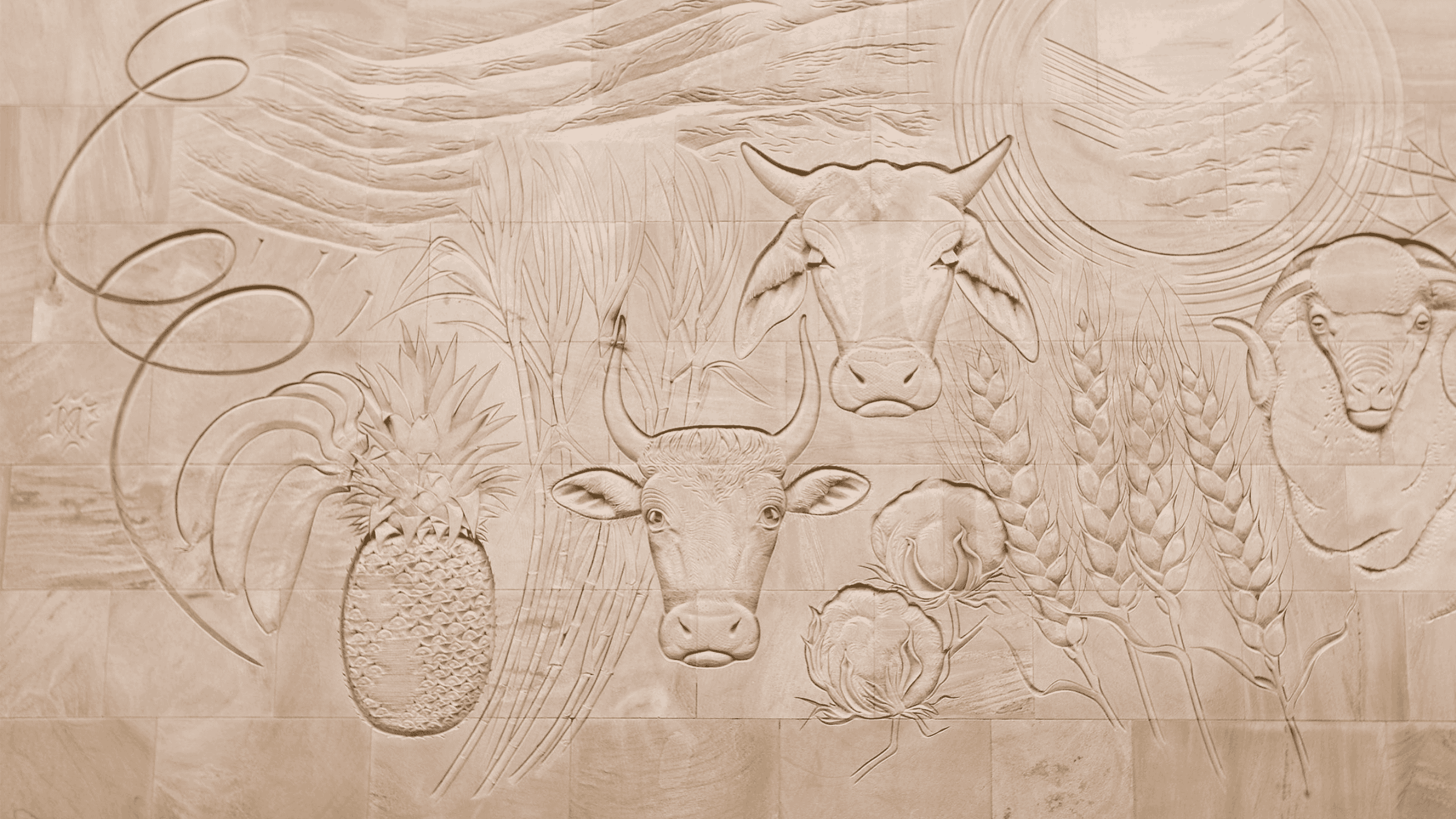
Background image: Evolution of agriculture, by Rhyl Hinwood AM CF, 1987: a frieze at UQ Gatton depicting Queensland’s agricultural industries of wool, beef, dairy, cotton, fruit, sugar cane and wheat, overlaid with representations of the weather extremes that impact all agriculture in the state.

Innovating the creative process

“When I first won the commission [to carve the grotesques] at UQ, I was carving with hand tools – I had 3 chisels and one mallet from the hardware shop,” Hinwood said.
In a departure from her earlier practice of the 1970s–90s, this time around Hinwood made up a ‘maquette’, or preparatory model (she’d never made sketches or models previously).
Neither did she carve the grotesque completely by mallet and chisel, nor with pneumatic tools.
“Too dangerous for my health!” she said.
“Even when I used basic masks with Vick’s Vaporub in my nostrils, as my mother had suggested, or later used sophisticated air-filtered masks, I always ended up covered in dust.
“This time, I made a 75% clay maquette, which UQ technicians 3D-scanned in my home studio. This scan was then sent to stonemasons in Sydney, where the scan was processed and used to cut the sandstone to profile and milled to the required shape of the full-size grotesque.
“This technology saved me weeks and weeks of slow, hard and probably hot work.
“I just had to make sure that the final details were as I envisaged them.”
To create the maquette in correct proportion, Hinwood worked the clay as if it were stone.
“Working in clay is a building-up process, whereas carving in stone entails cutting back,” she said.
“On this occasion, I had to be sure that this last grotesque was the same size as all the others, so I started with a roughly shaped block of clay about three-quarters the size and shape of the stone previously supplied for grotesques. I then partly carved and modelled the clay with hand tools.”
The maquette was then wrapped and stored in preparation for 3D-scanning. Once the scan was carved into high-quality stone, the piece returned to Hinwood’s workshop, where she refined the final details – completing not just the grotesque, but her final contribution as UQ’s last grotesque sculptor.
“It came back to my carving spot here in my backyard, and in quite no time it was sent back to the University to be installed. Just like any other grotesque leaving here, it was quite a historic moment.”
In her home studio, Hinwood unwraps the clay model of Valadian, which is usually covered in a plastic sheet for storage.
In her home studio, Hinwood unwraps the clay model of Valadian, which is usually covered in a plastic sheet for storage.
Etching two legacies in stone

Hinwood spent considerable time researching and reflecting on how to best acknowledge and honour Valadian’s life, and how to represent her leadership symbolically.
"As I am not a person of Aboriginal descent myself, I was mindful of the care and respect I must have in dealing with such a significant subject,” Hinwood said.
“It was important to listen to the voices of the Elders with whom I was conferring, and so I began to make enquiries.
“I read about Margaret and her life of exceptional achievement in the fields of education and the social sciences.
“I contacted Jasmine, her niece who lives interstate. She spoke with pride about Margaret’s purposeful single-mindedness, her concept of ‘each one, teach one’, and suggested that when I began the portrait, I should refer to images of her as a charming and articulate young woman being interviewed by a well-known ABC journalist who pulled no punches.
“I spoke and wrote to many people in person, borrowed many books, read her speeches, and visited the UQ Anthropology Museum, where I was welcomed by the Director, Michael Aird, and proudly shown the Voices of our Elders: Aboriginal story tellers exhibition, which included some artworks by Gaiarbau whose grotesque portrait I had carved – along with Mother Earth – in 1978.”
However, it was Hinwood’s conversation with Deputy-Vice-Chancellor (Indigenous Engagement) Professor Bronwyn Fredericks, herself a passionate advocate for the power of education, that was the catalyst for grasping a meaningful concept.
“Professor Fredericks said that Margaret’s leadership role in society was what set her apart,” Hinwood said.
“She opened the door to new opportunities for her people and led them down new paths for success, consequently strengthening their culture. By becoming a role model, Margaret inspired and empowered her people to be the best they could be.”
This can be heard in Valadian’s 1991 Frank Archibald Memorial Lecture:
We have turned our backs on our most precious asset – the future generation…Perhaps the greatest challenge of all for the ’90s is to take time out and reassess who we are, what we are and where we are going. It is time to rediscover ‘the essence’ of our cultural heritage and begin again. We could start by regenerating in our children a love of learning and a love of ‘reading’ that was the foundation of child development in the traditional past. Teach a child to read and you give that child the freedom to determine his/her own options in life. Teach an adult to read and you give that adult the power to access the world, improve his/her life chances and make this a better world in which to raise the children. Despite all the technology, our community is less educated today than our ancestors of 40,000 years ago. The challenge of the ’90s is to make us not the least educated, but the best educated.
Ultimately, Hinwood chose to depict a symbolic door being opened by the academic-gowned – and bonneted – pioneer, wearing her Officer of the Order of Australia insignia.
Hinwood referred to images of Valadian and her achievements, including the Officer of the Order of Australia insignia, while carving the grotesque.
Hinwood referred to images of Valadian and her achievements, including the Officer of the Order of Australia insignia, while carving the grotesque.
Leaving a mark on history – and UQ
“I’m delighted that I was commissioned to complete this special grotesque, the last in a series of 50 in the Great Court and the sixth female subject I have created,” Hinwood said.
“I believe Margaret’s passion, determination and leadership made her a true pioneer and role model for her people, opening the doors of opportunity in life.”

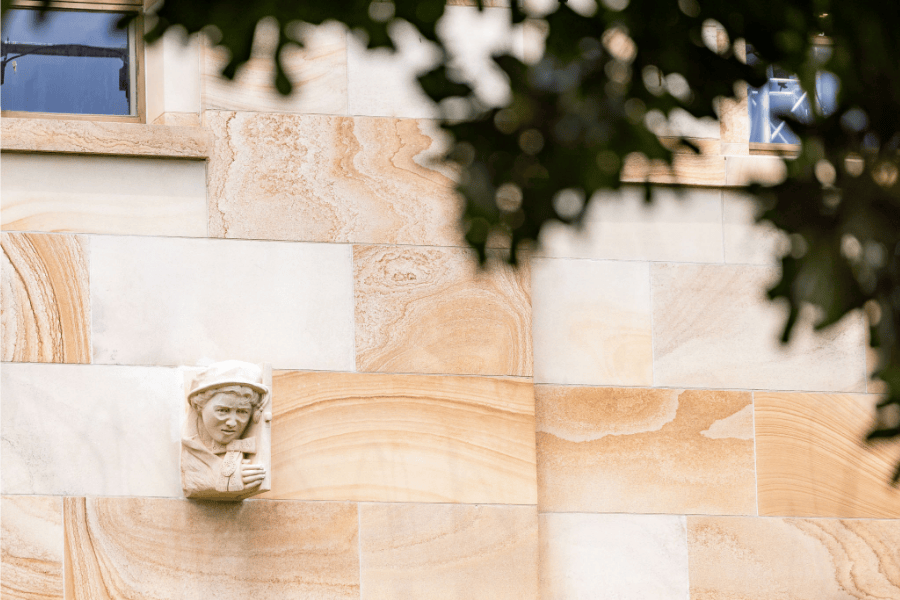




The final grotesque of Margaret Valadian has now been installed in the Great Court.
The final grotesque of Margaret Valadian has now been installed in the Great Court.

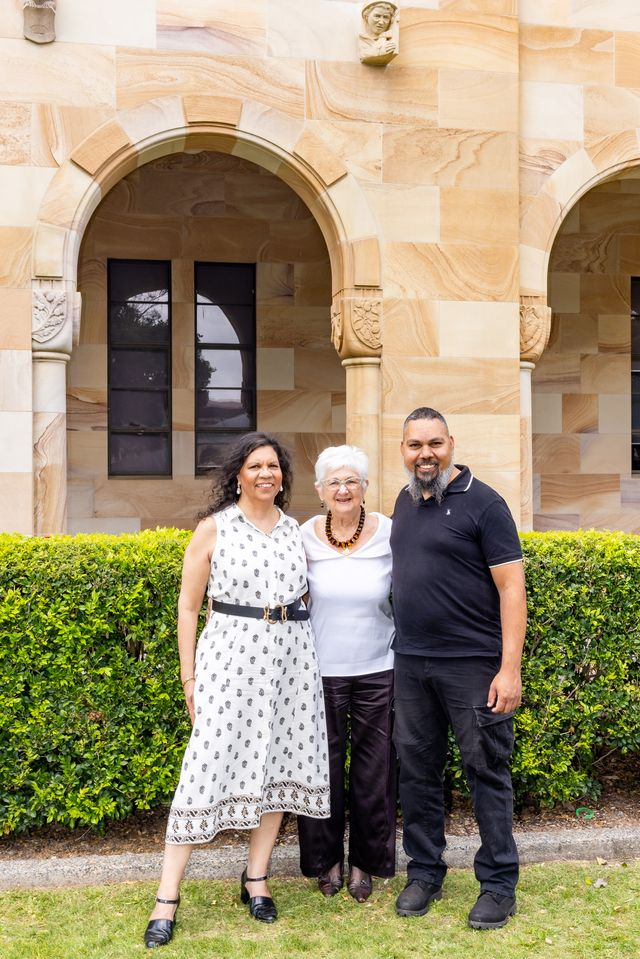
Jasmine and Scekar Valadian at the unveiling of the final grotesque of their Aunty, Margaret Valadian.
Jasmine and Scekar Valadian at the unveiling of the final grotesque of their Aunty, Margaret Valadian.

The final grotesque of Margaret Valadian in her academic gown and bonnet, pushing open a door.
The final grotesque of Margaret Valadian in her academic gown and bonnet, pushing open a door.
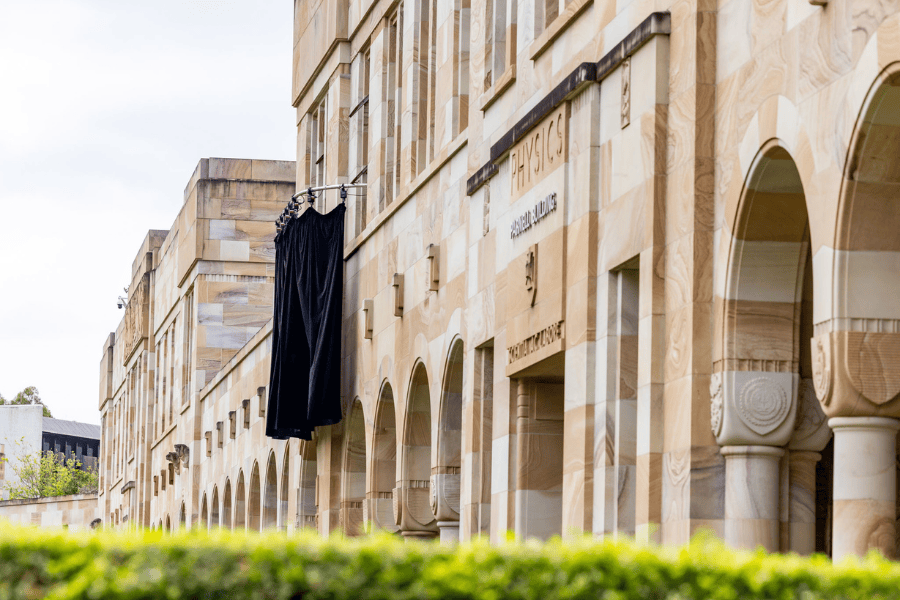
Prior to the official unveiling, the final grotesque was hidden by a black veil.
Prior to the official unveiling, the final grotesque was hidden by a black veil.

 Built with Shorthand